skin care
How to Fix Sun Damaged Skin
Eve Mérinville | Corporate RD Excellence & SC RD and Innovation Director
5 min read

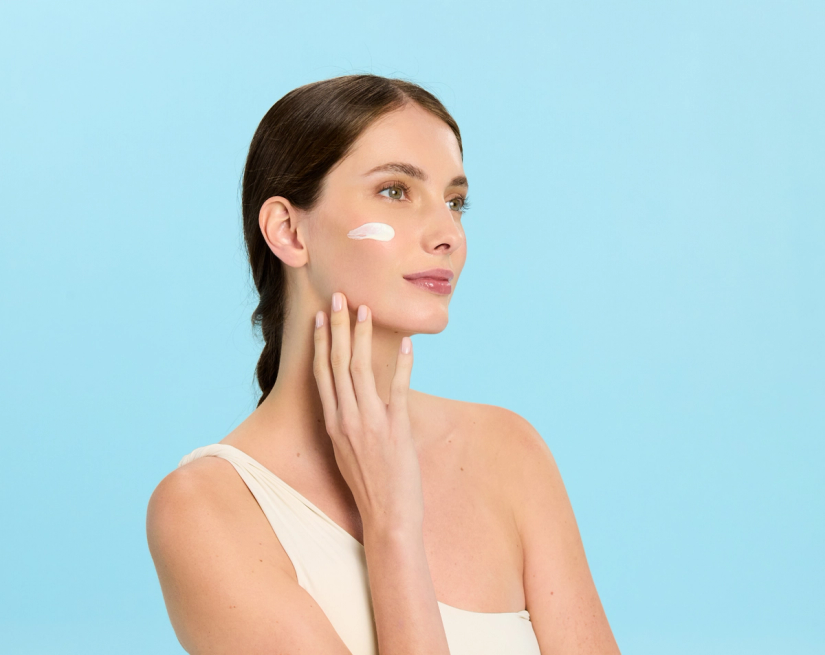
There is a precise moment when many people first notice the signs of sun damage on their skin. It rarely happens under a beach umbrella or during a day on vacation. More often, it happens in an ordinary moment: in front of the bathroom mirror in the morning, in the car when the light comes in from the side, or during a video call, when the webcam suddenly seems more honest than the mirror.
Sun damage often appears quietly. Dark spots, fine lines, rough texture and dullness do not arrive all at once; they build gradually, day after day. And while the skin is constantly renewing itself, accumulated UV damage cannot be completely erased.
In fact, a French study found that up to 80% of the visible signs of facial aging may be linked to UV exposure*. That is exactly why protecting and repairing your skin every day is not simply a beauty gesture, but a concrete way to influence how your skin will look, feel, and age tomorrow.
* Flament F, Bazin R, Laquieze S, Rubert V, Simonpietri E, Piot B. Effect of the sun on visible clinical signs of aging in Caucasian skin. Clin Cosmet Investig Dermatol. 2013 Sep 27;6:221-32. doi: 10.2147/CCID.S44686. PMID: 24101874; PMCID: PMC3790843.
What Does Sun-Damaged Skin Look Like?
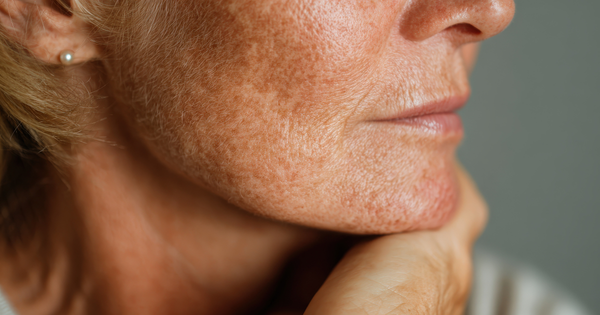
Sun damage appears as a dull complexion, brown spots, rough texture, dryness, and loss of elasticity. Sun-damaged skin on the face looks like fine lines, dark spots, and uneven tone. Sun-damaged skin on the arms and body includes age spots, crepey skin, and rough patches.
This process, called photoaging, happens when UV rays break down collagen and elastin. UVB rays cause surface damage and sunburn, while UVA rays trigger bigger changes, including dark spots and tone loss.
This is where science adds a surprising detail: DNA damage from UV exposure continues for hours after sun exposure ends. This is why skincare doesn't stop with SPF. After sun exposure, use hydrating, soothing ingredients and antioxidants to support skin recovery.*
* Premi S, Wallisch S, Mano CM, Weiner AB, Bacchiocchi A, Wakamatsu K, Bechara EJ, Halaban R, Douki T, Brash DE. Photochemistry. Chemiexcitation of melanin derivatives induces DNA photoproducts long after UV exposure. Science. 2015 Feb 20; 347(6224):842-7. doi: 10.1126/science.1256022. PMID: 25700512; PMCID: PMC4432913.

Signs of Sun-Damaged Skin on Your Face
The face shows sun damage first: dark spots, fine lines, crow's feet, melasma, uneven tone, loss of radiance, and dark spots. Dark spots are often the first to catch the eye because melanin production becomes uneven with repeated sun exposure. Melanocytes overproduce in some areas and underproduce in others, creating irregular pigmentation, solar lentigines, and melasma (especially in genetically predisposed individuals).
Signs of Sun-Damaged Skin on Your Body
The most common signs of sun damage on the body include age spots, discoloration, dry and rough skin, thicker-feeling patches, loss of firmness, and a thin, crepey texture, especially on the arms, legs, and décolleté. Apply sunscreen to shoulders, hands, arms, décolleté, and legs with the same diligence as your face to prevent spots, dryness, and premature aging.
How to Repair Sun-Damaged Skin at Home
Skincare can't erase UV damage, but it helps restore radiance, hydration, and an even complexion. Repair works as a consistent habit, not an emergency response. Sun-damaged skin needs two daily routines:
- Prevention: Sunscreen to stop damage accumulation
- Targeted ingredients like:
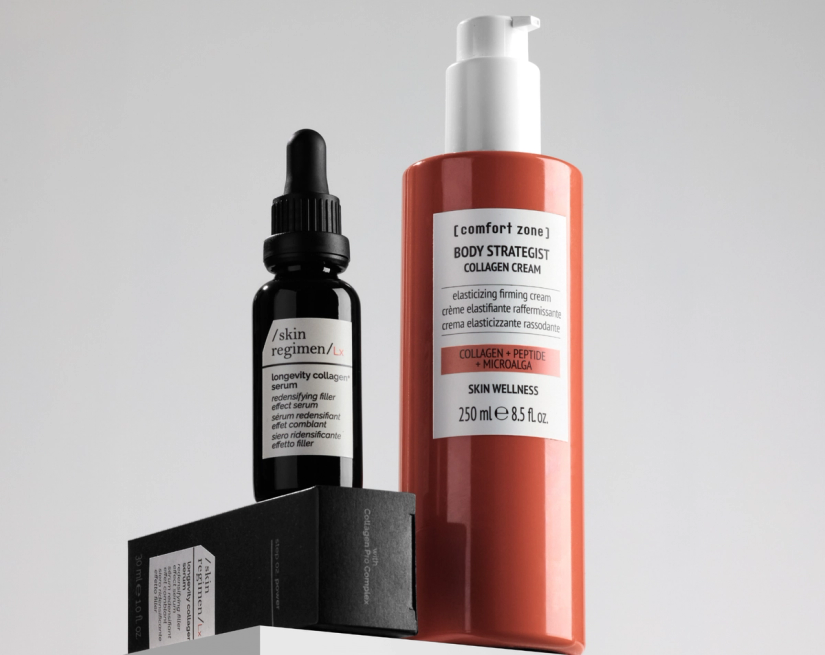
- Vitamin C to counteract UV-induced oxidative stress and even skin tone. Try /skin regimen/Lx Vitamin C Serum.
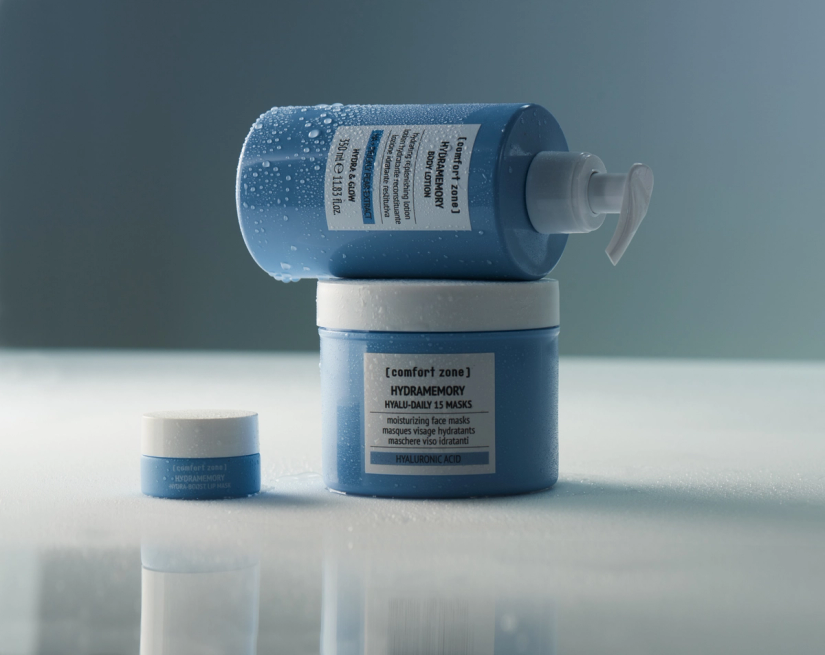
- Hyaluronicacid to hydrate and improve elasticity. Use Hydramemory Hyalu-Daily 15 Masks for extra hydration.
Topical Ingredients That Help Repair Sun Damage
A truly effective sun routine supports the skin in three key moments: before, during, and after sun exposure. It prepares the skin, protects it while it is exposed, and helps it recover afterwards.
- Preparation: skin that is well hydrated is better equipped to face sun exposure. SUN SOUL Tan Maximizer promotes a more intense, even-looking tan.
- During exposure, the essential step remains sunscreen, chosen according to skin phototype, body area, and UV intensity.
- After sun exposure, the skin needs to recover: water, lipids, soothing active ingredients, and antioxidants help reduce feelings of dryness, redness, and oxidative stress.
| ACTIVE SUN SOUL | HOW THEY HELP SKIN EXPOSED TO THE SUN | SOLAR ROUTINE PHASE |
| Acetyl Tyrosine | Amino acid precursor of melanin, it helps promote a more intense and uniform tan. It is not a substitute for SPF. | Prepare and nourish |
| Organic Argan Oil, Ecocert certified | Organic Argan Oil, Ecocert certified It nourishes and softens the skin, helping it maintain elasticity and comfort before and after the sun. | Prepare and nourish |
| Biomimetic Peptide, Acetyl Hexapeptide-51 Amide | Mimics skin antioxidant action and works synergistically with sunscreens to help protect skin from signs of photoaging. | Protect during exposure |
| Acerola Extract | Fruit known as "Barbados cherry.” Rich in vitamin C, it supports antioxidant action and helps the skin counteract UV-induced stress. | Protect against oxidative stress |
| Hop Extract | Helps counteract signs of photoaging, such as uneven tone, loss of brightness, and blemishes | Counteract the signs of photoaging |
| Abyssinian Oil | Rich in fatty acids, it helps to strengthen the surface lipid barrier and preserve softness and comfort | Support the skin barrier |
| Physalis Angulata Extract | Soothing active ingredient obtained from a plant native to Brazil, which helps calm sun-induced redness and restore relief to the skin | Recovering after exposure |
| Natural Lipocomplex | A complex of ceramides, phospholipids, and sunflower glycolipids, similar to the lipids of the stratum corneum, helps support the skin barrier | Restore skin comfort and lipids |
| Aloe Vera Juice | Refreshing and soothing, it helps restore moisture and calm the feeling of hot or sensitized skin | Soothe and hydrate |
The Role of Hydration in Sun Damage Recovery
After sun exposure, the skin can feel tight, may itch or redden more easily, and might lose softness. This is because UV rays on the skin barrier* showed that sun exposure can stress the outer layer of skin, making it less effective at protecting the skin and retaining water. Hydration is essential for recovery:
SUN SOUL Hydraglow After Sun — 97.2% natural origin formula that hydrates for up to 8 hours**, leaving skin softer and brighter.
SUN SOUL Face & Body After Sun — Lightweight cream suitable for sensitive skin. Reduces redness in as little as 1 hour***, leaving skin soft and comfortable.
* Alhasaniah A, Sherratt MJ, O'Neill CA. The Impact of Ultraviolet Radiation on Barrier Function in Human Skin: Molecular Mechanisms and Topical Therapeutics. Curr Med Chem. 2018; 25(40):5503-5511. doi: 10.2174/0929867324666171106164916. PMID: 29110595.** Instrumental evaluation, independent laboratory, 20 people, 1 application***Instrumental test, independent laboratory after induced skin photo-irritation, 20 panelists
Daily Sun Protection to Prevent Further Damage
Repair routines fail without daily sun protection. To prepare the skin before exposure, use SUN SOUL Tan Maximizer at least 10 days before beach time or pool days. This face and body cream-gel intensifies and evens your tan, but it contains no sunscreen filters. Always use it with adequate SPF protection.
During exposure, the choice of sunscreen depends on the area, skin phototype, and intensity of the sun.
- SUN SOUL Face Cream SPF30 is a silky, fast-absorbing, water-resistant anti-aging face formula ideal for sensitive skin.
- SUN SOUL Cream SPF30 for face and body is designed for those who enjoy water sports and outdoor life.
- SUN SOUL Face Cream SPF50 provides higher UVA/UVB protection and is dermatologically tested on sensitive skin.
Protection only works when it is used correctly. Apply about 2 mg of product per cm² of skin, being sure to reapply every two hours and cover evenly, including shoulders, hands, feet, and ears. The best sunscreen is not only the one with the highest SPF on the label, but the one you apply properly, reapply consistently, and enjoy wearing on your skin.
Building a Sun Damage Repair Skincare Routine
The best routine for sun-damaged skin is the one you can repeat naturally. Consistency is what turns skincare from an occasional gesture into a real recovery strategy.
In the morning, start with a gentle cleanse, or simply rinse if your skin is dry or sensitive. Apply an antioxidant serum, such as Skin Regimen Lx Vitamin C Serum, followed by a moisturizer like Hydramemory Rich Sorbet Cream. Always finish with sunscreen:
- SUN SOUL Face Cream SPF30 is a good everyday option
- SUN SOUL Face Cream SPF50+ is ideal when you want a higher level of protection.
- SUN SOUL Milk SPF20 can be a practical ally for sensitive skin all over the body
To help skin release buildup from the day, SUN SOUL 2In1 Shower Gel is a 2-in-1 cleanser for body and hair. After cleansing, you can alternate targeted evening treatments, such as Renight Cream and Renight Oil, ideal for a nourishing, antioxidant routine.
On post-sun recovery evenings, SUN SOUL Hydraglow After Sun and SUN SOUL Face & Body After Sun can also complete the routine with a soothing, moisturizing step. With consistency, skin moves from protection to recovery.
Protect and Repair With Comfort Zone SUN SOUL
Some days stay on the skin long after the sun goes down. SUN SOUL was created to accompany those moments, helping the skin experience the light with more protection, more comfort, and more resilience.
SUN SOUL is high-performance sun care with a conscious approach. Up to 97% ingredients of natural origin, formulas free from silicones, parabens, nano filters, artificial colorants, and acrylates, dermatologically tested on sensitive skin, and eco-designed packaging made from 100% post-consumer recycled plastic.
The goal is not to remove the sun from life, but to change the way the skin meets it. Because skin does not ask to be taken back in time. It asks to be protected more consistently, listened to earlier, and supported after exposure. When that happens, every day in the light can leave something more beautiful than a trace: skin that feels more prepared, more comfortable, and more radiant for the future.

FAQs
1. Can you reverse sun damage on your skin?
Not completely. Some more serious damage cannot be fully erased, but visible signs such as dark spots, uneven texture, dehydration, dullness, and fine lines can improve with daily SPF, targeted active ingredients, and professional dermatological treatments.
2. What does sun-damaged skin look like?
Sun-damaged skin may appear as dark spots, melasma, solar lentigines, fine lines, rough or dry texture, loss of elasticity, visible capillaries, redness, and uneven tone. It often shows up gradually, becoming more noticeable over time.
3. Does vitamin C help repair sun-damaged skin?
Yes. Topical vitamin C has antioxidant properties and can help improve radiance, uneven tone, pigmentation, and visible signs of photoaging when used consistently, especially together with daily sunscreen.
4. How long does it take for sun-damaged skin to heal?
Dryness, tightness, and sensitivity may improve within a few days, while dark spots, fine lines, and uneven texture often require weeks or months of consistent skincare and sun protection.
5. What is the best moisturizer for sun-damaged skin?
The best moisturizer for sun-damaged skin contains hydrating, emollient, and soothing ingredients that help support the skin barrier, reduce dryness, and restore comfort to skin that feels tight, fragile, or sensitized.
6. What SPF should I use to prevent further sun damage?
Choose a broad-spectrum sunscreen with SPF 30 or higher every day. Reapply it every two hours when outdoors, and always after swimming, sweating, or towel-drying.
7. Is it safe to use sunscreen on sensitive skin?
Yes, if you choose formulas suitable for sensitive skin and dermatologically tested. If you have rosacea, allergies, very reactive skin, or a skin condition, ask a dermatologist for personalized advice.