skin care
How Collagen Affects Your Body Skin
Eve Mérinville | Corporate RD Excellence & SC RD and Innovation Director
8 min read

Your skin is your body's largest organ. It deserves to be protected and nourished. And when we consider collagen, we're actually talking about the deep support system that helps the skin feel stronger, appear firmer, and remain resilient over time, through seasons, stress, and change.
Have you ever wondered what collagen does for the skin of our body? Collagen helps the skin maintain tone, elasticity, and hydration. It’s a key factor in maintaining skin that feels healthy and supported, especially when body care becomes part of a daily routine.
What Is Collagen?
Collagen is the most abundant protein in the body and plays a key role in maintaining skin strength and structure. In the dermis, it works alongside elastin and hyaluronic acid as part of the extracellular matrix, collagen provides firmness, elastin supports elasticity, and hyaluronic acid helps retain moisture and maintain skin hydration.
The primary types of collagen in the skin are types I and III. Type I makes up the majority, while type III supports the overall structure and tissue quality. Together, they help keep skin firm, elastic, and balanced over time.
Understanding Collagen Peptides
To understand the role of collagen peptides, it helps to start with the types of collagen naturally found in the skin. Type I makes up about 85-90% of skin collagen and provides structure, firmness, and strength. Type III accounts for 10-15% and supports elasticity, softness, and overall tissue quality.
These two types work together to form the skin’s underlying support structure. Over time,collagen production slows, particularly type Ileading to skin that appears less firm, dense, and elastic.
This is where collagen peptides come into focus. Rather than replacing lost collagen, certain forms, such as hydrolyzed collagen, are designed to mimic human collagen fragments. Their low molecular weight allows them to support the skin more effectively by helping stimulate natural collagen production, promoting firmness, structure, and resilience over time.
Collagen and Skin
Collagen plays a key role in skin health by supporting the structure of the dermis, the layer beneath the surface.When this support is strong, skin feels firmer and smoother, and is better able to handle daily stress. It’s also associated witha more youthful appearance, not because it stops aging, but because well-supported skin looks more elastic, even, and hydrated. In short,collagen helps maintain the skin’s natural vitality.
Benefits of Collagen for Your Skin
Collagen supports not only how skin looks, but also how it feels, soft, smooth, and elastic. Products that support collagen can help maintain structure, improve firmness, and reduce moisture loss. As collagen production naturally declines over time, skin may become less firm and more prone to dryness, making consistent body care essential for maintaining overall skin health.
Body Skin vs. Facial Skin
Body skin behaves differently than facial skin, it has a thicker barrier, fewer oil glands, andrecovers more slowly, making it more prone to drynessand loss of elasticity. That’s why body skin requires dedicated formulas and a consistent body skincare routine, as facial products aren’t designed to meet these specific needs.
Collagen For Your Face
In facial skincare, collagen is often linked to smoother, more supple-looking skin. While the face experiences the most daily stress, it also receives the most consistent care, making changes more noticeable than on the body.
As part of a well-rounded routine, collagen helps support hydration and comfort. When combined with ingredients that protect against oxidative stress and support renewal, it contributes to healthier, more balanced-looking skin.
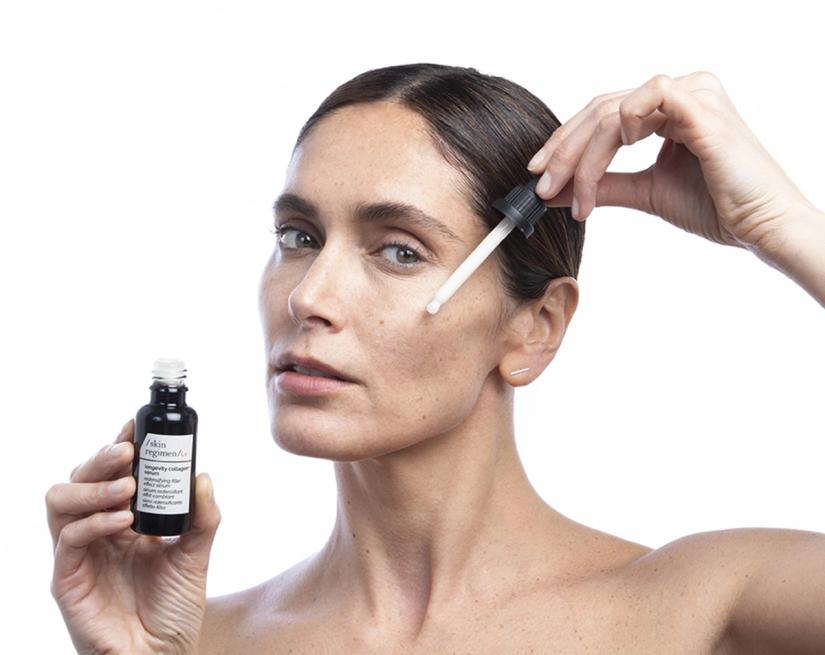
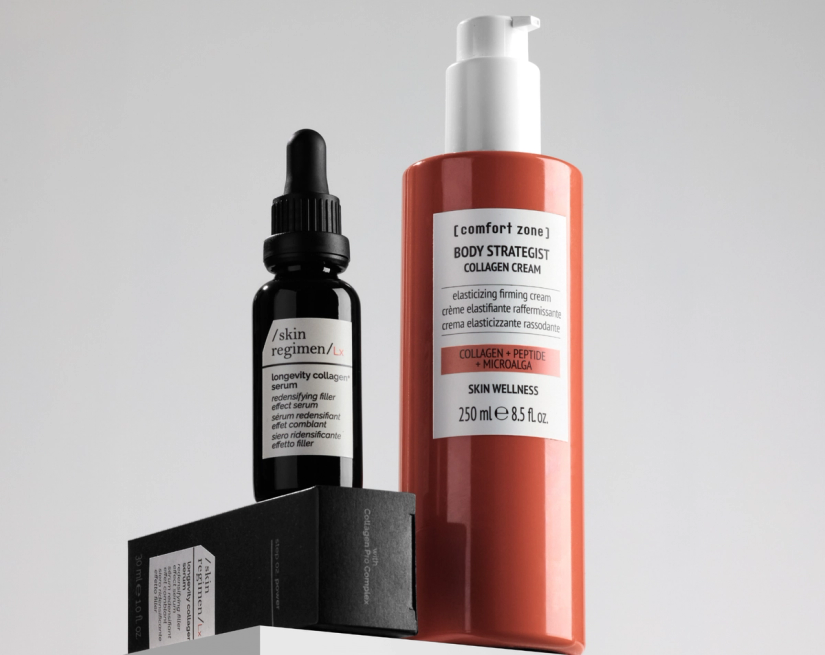
A great example is the new Skin Regimen Lx Longevity Collagen+ Serum, a redensifying serum designed to deliver an immediate filler-like effect. Its formula combines the Longevity ComplexTM, which helps protect the skin from daily exposome-related stressors, with the Collagen Pro Complex, created to actively support new collagen production.Powered by hydrolyzed low molecular weight collagen, biomimetic peptides, Lemon Balm extract, rich in rosmarinic acid and sourced from plants grown at EROC, the European Regenerative Organic Center in Parma, and acacia collagen, this innovative treatment helps improve the look of firmness, plumpness, and definition for skin that appears smoother, fuller, and more revitalized.What makes this complex especially noteworthy is its ability to boost type I and type III collagen by 40.6%*, while its synergy with the Longevity ComplexTM helps define the distinctive redensifying action of the new Skin Regimen Lx Longevity Collagen+ Serum, enhancing its immediate filler-like effect.**
* Independent laboratory, instrumental and clinical evaluation, 20 women, after 1 application
** In vitro test on ingredient.


Collagen For Your Body
Collagen provides structural support for body skin, but its needs differ from those of the face. Body skin is more susceptible to dryness, slower renewal, and loss of firmness and elasticity. That’s why targeted body products are essential, formulas designed to support collagen while addressing these specific concerns. A consistent body skincare routine helps maintain comfort, tone, and overall skin quality over time, especially in areas most prone to dryness or loss of firmness, such as the arms, abdomen, thighs, knees, and décolleté.
Among the latest innovations, the new Body Strategist Collagen Cream stands out. A fast-absorbing body cream that hydrates, brightens, and smooths the skin while helping support its structure. Enriched with biotechnological hydrolyzed collagen, acetyl tetrapeptide-2, and unicellular microalgae extract, it helps improve the look of elasticity, tone, and firmness for skin that appears more compact and revitalized.
More than a targeted body treatment, it reflects the new soul of Body Strategist, a Skin WellnessApproach that sees body skin not simply as a surface to correct, but as a living, resilient ecosystem to nurture every day with care, balance, and intention. Lightweight yet enveloping, this formula brings collagen science from facial skincare into body care, combining targeted performance with a high percentage of naturally derived ingredients to support skin that looks firmer, smoother, and more radiant over time.The new Body Strategist Collagen Cream embodies Body Strategist’s new vision, transforming body care into a daily ritual of harmony, resilience, and skin homeostasis.


Topical Collagen vs. Oral Collagen
Topical and oral collagen support the skin in different ways. Oral collagen provides amino acids that, once absorbed, can also be used by the skin to support its natural collagen synthesis. Its action is therefore more indirect, meaning visible improvements in skin quality typically require time and consistent use.
Topical collagen works more directly on the skin’s surface. Biomimetic and hydrolyzed forms can help support hydration, elasticity, and overall skin comfort, offering more immediate benefits.
Because of this, topical collagen plays an important role in a daily body skincare routine, providing consistent, targeted support where the skin needs it most.
How Age and Lifestyle Impact Collagen Levels
Collagen naturally declines with age, beginning in the mid-20s at an estimated rate of about 1-1.5% per year, with significant loss by midlife*. Over time, this affects skin firmness, elasticity, hydration, and repair.
Lifestyle factors also play a role. Sun exposure, pollution, smoking, chronic stress, insufficient sleep, unbalanced diet, and poor hydration can accelerate oxidative stress and impair fibroblast function, negatively affecting collagen production.
Body skin may show these effects more clearly, as it has fewer oil glands and is often less consistently cared for. When hydration and barrier function decline, skin can appear drier, less firm, and less resilient.
* Reilly DM, Lozano J. Skin collagen through the lifestages: importance for skin health and beauty. Plast Aesthet Res. 2021;8:2. http://dx.doi.org/10.20517/2347-9264.2020.153
Boosting Collagen Levels
Supporting collagen isn’t about adding more—it’s about helping the skin maintain and protect what it already has. This means limiting natural breakdown while supporting strength, elasticity,and firmness over time.
Daily habits play a key role. Sun protection, proper hydration, a balanced diet, quality sleep, and avoiding smoking all help support collagen production and preservation.
A consistent body skincare routine also matters. Maintaining hydration and a healthy skin barrier with gentle,nourishing products helps create the conditions for skin to stay smooth, strong, and firm.
Collagen Skincare Products
Not all collagen products serve the same purpose. A well-formulated body cream is designed to support elasticity, softness, and tone, especially in larger, drier areas where skin can feel less comfortable. The benefits often show up in everyday ways: skin that feels smoother, softer, andmore toned throughout the day.
Face and body skin also have different needs. While the face benefits from lightweight, layered textures, the body requires richer formulas suited to slower renewal and lower natural lipid levels.
For this reason, collagen-based body care should be treated as its own step, not simply an extension of facial skincare.
Discover Body Strategist, the New Skin Wellness Approach
Body Strategist from Comfort Zonewas created around a simple but highly relevant idea: Body care should not start only when an imperfection appears, but much earlier, as part of a consistent daily routine. This is the foundation of the new Skin Wellness approach, a proactive, holistic vision centered on supporting skin homeostasis, hydration, protection, tone, and resilience every day.
Within this system, collagen plays a key role in supporting barrier function, firmness, elasticity, and comfort.The Body Strategist Collagen Cream represents this approachwith a lightweight, velvety texturesuitable for all skin types, especially those experiencing loss of tone or density. Formulated with vegan hydrolyzed collagen, Euglena gracilis microalgae, and Acetyl Tetrapeptide-2, it is designed to support collagen and long-term skin quality. Clinical testing showed improvements in 5 key parameters of skin wellness: +32.6% hydration, +7.1% barrier function, +21.5% radiance, +6.3% elasticity, and +26.9% firmness*. Clinical trials have also shown a +52.7% increase in the skin's natural collagen.**.
Each Body Strategist product targets specific needs. Body Strategist D-Age Cream offers rich nourishment for dry or mature skin showing more advanced loss of firmness, while Body Strategist Thermal Mud helps tone and remodel the skin while improving the appearance of cellulite.
Together, the Body Strategist line delivers a targeted approach to body care, with formulas designed to support the skin through its changing needs over time.
*Independent laboratory, Instrumental assessment, 20 participants, 28 and 56 days of use, 2 times a day. **Independent laboratory, in vitro testing of ingredients on fibroblasts.
How To Add Collagen-Rich Products to Your Routine
Collagen plays a fundamental role in maintaining the skin’s strength, elasticity, and overall comfort. Today, supporting collagen is no longer limited to facial skincare, innovations such as the Skin Regimen Lx Longevity Collagen+ Serum for the face and the new Body Strategist Collagen Cream for the body now make it possible to reinforce the skin’s structure from head to toe, creating a more complete and cohesive routine.
For the face, the Skin Regimen Lx Longevity Collagen+ Serum offers a targeted approach, helping improve the look of firmness and definition while delivering an immediate filler-like effect.
If we care for the skin of the face daily, the same should apply to the body. With its unique needs, body skin benefits from a consistent, targeted approach, like The Wellness Routine by Body Strategist, designed to make body care a daily skin-wellness ritual.
The routine includes three essential steps: Body Strategist Peel Scrub to exfoliate and prep the skin, Body Strategist Collagen Cream to support firmness and elasticity, and Body Strategist Oil to enhance softness and comfort.
Together, these steps help smooth, firm, andimprove overall skin texture. With consistent use, skin not only looks better, but feels stronger, more elastic, and more balanced.
FAQs
1.Does collagen actually do anything for your skin?
Yes, it helps to support skin structure, elasticity, and tone. In cosmetics, it mainly supports hydration, comfort, and skin quality. With consistent use, the skin can appear firmer and smoother.
2.What are the 5 signs that collagen is working?
- Skin appears more hydrated.
- Texture is smoother and more uniform.
- Skin feels softer to the touch.
- Elasticity appears more evident.
- Over time, the skin appears firmer.
3.Are there negative effects of collagen?
Collagen is generally well-tolerated. In cosmetic products, tolerability also depends on the overall formula and individual sensitivity of the skin. This is why it is always important to check the INCI and choose formulas suitable for your skin’s needs.
4.What foods are good for your skin’s collagen?
- Foods rich in vitamin C: kiwi, citrus fruits, strawberries, peppers, broccoli
- Protein-rich foods: eggs, fish, chicken, Greek yogurt, legumes
- Foods rich in zinc and copper: pumpkin seeds, dried fruit, bitter cocoa, shellfish, legumes