skin care
Cellular Senescence and How to Fight It
Eve Mérinville | Corporate RD Excellence & SC RD and Innovation Director
8 min read

Cellular senescence is a natural process where skin cells stop dividing, gradually affecting firmness, radiance, and elasticity. While it can’t be fully reversed, science shows that healthy lifestyle habits and targeted skincare— like Comfort Zone’s Sublime Skin line — can support cellular function, slow visible signs of aging, and help skin stay resilient and radiant.
What Is Cellular Senescence?
Imagine your skin cells as tireless little artisans, constantly building, repairing, and protecting your body. After years of work, some of these artisans put down their tools, just like our cells stop dividing but remain alive and active. This natural process, called cellular senescence, reflects each cell’s commitment to the body’s overall well-being. Our tissues, organs, and cells work together in a coordinated system, replacing each other when necessary, and leaving room for regeneration and the formation of new functioning cells.
Over time, senescent cells accumulate and release inflammatory molecules that damage their surroundings. This process contributes to visible skin aging and reduced elasticity, radiance, and resilience. In response, the world of cosmetics— Comfort Zone in particular — is shifting towards a skin-longevity approach that focuses on long-term vitality rather than simply "anti-aging.” The Comfort Zone research group is developing formulations able to help modulate the effects of cellular senescence and supporting the skin’s natural regenerative processes. The goal isn’t to stop time, but to promote skin that can renew, repair, and maintain balance even in the most mature stages of life.
Cellular Senescence and Aging
Cellular senescence is one of the 12 hallmarks of aging identified in Dr. López-Otín's study* "Hallmarks of Aging: An Expanding Universe." When too many cells stop dividing and remain in a senescent state, they release inflammatory signals that can damage nearby tissues.
In the skin, this buildup creates an environment prone to aging. Senescent cells produce SASP (Senescence-Associated Secretory Phenotype)—a mix of inflammatory molecules, enzymes, and free radicals that break down collagen and elastin, slow regeneration, and disrupt the skin barrier. This contributes to common signs of aging, such as deeper wrinkles, reduced firmness, dryness, and a dull complexion.
Senescence also interacts with other age-related processes like mitochondrial dysfunction, stem-cell decline, and chronic low-grade inflammation (inflammaging), especially when combined with stress, pollution, sun exposure, poor sleep, or an unbalanced lifestyle. Together, these factors accelerate visible skin aging and make senescence a major driver of long-term skin changes.
*López-Otín C, Blasco MA, Partridge L, Serrano M, Kroemer G. Hallmarks of aging: An expanding universe. Cell. 2023 Jan 19; 186(2):243-278. DOI: 10.1016/J.cell.2022.11.001. Epub 2023 Jan 3. PMID: 36599349.
The Root Cause of Senescence
Imagine your DNA as an orchestra score, where each gene is a note that guides your skin’s health. Daily stressors—UV rays, pollution, free radicals, and natural replication errors—can disrupt this score. When the damage becomes too much for the cell to repair, a protective process called cellular senescence activates. The cell stops dividing to prevent further mistakes, much like an orchestra pausing to avoid playing a wrong note. This mechanism is helpful in small amounts, but when too many senescent cells accumulate, it can interfere with tissue function and contribute to visible skin aging.

Our Body's Response to Senescence
When a cell becomes senescent, the body responds to protect the skin. The immune system identifies and clears senescent cells, keeping their numbers in balance. These cells also release signals that influence nearby tissues and help guide regeneration.
This system works well when senescent cells remain limited, and the immune response is strong, helping the skin stay firm, smooth, and radiant. But as Dr. Campisi’s study “Aging, Cellular Senescence, and Cancer”* shows, chronic stress, environmental exposure, aging, and unhealthy habits can weaken this control. When that happens, senescent cells build up, disrupt communication between cells, and increase stress within the skin.
*Campisi J. Aging, cellular senescence, and cancer. Annual Review of Physiology. 2013;75:685-705. doi:10.1146/annurev-physiol-030212-183653.
The Consequences of Cellular Senescence
Wrinkles, loss of tone, and a duller complexion aren’t just signs of time passing—they also reflect changes happening inside our cells. Senescent cells no longer divide, but they continue releasing signals that can disrupt skin structure, slow regeneration, and weaken the skin’s defenses against sun, pollution, and daily stress.
This buildup of senescent cells leads to reduced elasticity, dryness, deeper wrinkles, and uneven radiance. These visible changes are reminders of ongoing biological processes. By understanding them, we can support the skin through healthy habits, daily protection, and targeted treatments that help maintain elasticity and a more radiant, resilient appearance.
Preventing Cellular Senescence
The good news is that while cellular senescence is natural, we can slow its buildup through daily habits. Movement is a key pillar: regular, moderate exercise boosts immune function and helps cells repair themselves. Several scientific studies* show that physical activity reduces oxidative stress and improves how cells manage DNA damage, delaying senescence.
Nutrition also plays a major role. Antioxidant-rich foods—like fruits, vegetables, whole grains, and quality proteins—help protect cells and support regeneration. Good sleep, stress management, and protection from the sun and pollution help slow down cellular aging processes and keep the skin bright and resilient.
Preventing senescence isn’t about one product or habit—it requires a holistic approach. Combining healthy lifestyle choices with a consistent, targeted skincare routine helps keep cells active and resilient, allowing the skin to look and feel healthier over time.
*Englund DA, Sakamoto AE, Fritsche CM, Heeren AA, Zhang X, Kotajarvi BR, Lecy DR, Yousefzadeh MJ, Schafer MJ, White TA, Atkinson EJ, LeBrasseur NK. Exercise reduces circulating biomarkers of cellular senescence in humans. Aging Cell. 2021 Jul; 20(7):E13415. doi: 10.1111/acel.13415. Epub 2021 Jun 8. PMID: 34101960; PMCID: PMC8282238.
Importance of Senescence Research
Research on cellular senescence is becoming essential for understanding how the skin ages and for developing new skincare approaches. The study “Faces of Cellular Senescence in Skin Aging”* shows that different skin cells—fibroblasts, keratinocytes, and melanocytes—enter senescence in different ways, and their buildup can weaken tissue function and slow regeneration.
Understanding these dynamics is crucial to opening up new perspectives in skin care and maintenance. Senescence isn’t a single, uniform process. Each cell type contributes differently to skin aging, and studying these interactions can guide strategies that support elasticity, tone, and overall skin health. Key challenges remain, such as identifying which senescent cells are harmful and translating these findings into safe, effective cosmetic solutions.
*Ho CY, Dreesen O. Faces of cellular senescence in skin aging. Mech Ageing Dev. 2021 Sep;198:111525. doi: 10.1016/j.mad.2021.111525. Epub 2021 Jun 21. PMID: 34166688.
Comfort Zone's Sublime Skin Line
Comfort Zone’s scientific research has led to the creation of Sublime Skin, a line designed to counteract the signs of aging and support skin vitality and resilience at the cellular level. At the heart of the line, we find two powerful and complementary hero active ingredients:
- Acetyl-Hexapeptide 8: A relaxing peptide that helps counteract the effects of aging, reducing superficial wrinkles and expression lines with an effective tightening action.
- Achillea millefolium (yarrow): A powerful phytochemical-rich plant known for supporting mature skin. Grown through regenerative farming at EROC in Parma, the yarrow used by [ comfort zone ] is exclusive and undergoes a double extraction process to maximize its benefits.
- Aqueous extract: Rebalancing and protective; helps preserve collagen and prevent its breakdown.
- Oleolita (oil extract): Rich in flavonoids and terpenes, which enhance antioxidant protection.
This combination of advanced research and targeted ingredients makes Sublime Skin an essential ally in a skin longevity regimen designed to promote stronger, more elastic, and more vibrant skin over time.
Your Anti-Aging Routine
Cleansing
Start your routine with a gentle cleanser that respects the skin barrier. The new Sublime Skin Pro Skin Barrier Cleanser by Comfort Zone transforms from a balm into a milk, removing makeup and impurities while leaving the skin soft and comfortable. Enriched with Achillea Millefolium oil and nourishing sweet almond oil, it is ideal for sensitive and mature skin. Clinically tested to preserve the integrity of the skin barrier* and safe for the eye area, it is also perfect for double cleansing.
Nourish and Illuminate
For an immediate glow effect, discover Sublime Skin Precious Glow Drops. This bi-phase formula combines Achillea millefolium oil and baobab oil to support the skin barrier and improve skin elasticity. Its lightweight, biomimetic texture absorbs quickly, leaving the skin smoother and firmer. Clinically tested: 90% of women reported more even, radiant, and smoother-looking skin after 28 days of use**.
Smooth, Firm, and Hydrate
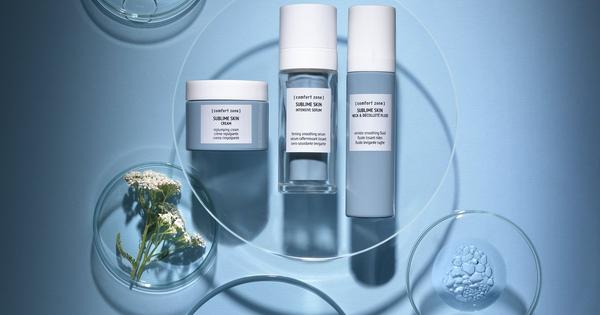
At the heart of the Sublime Skin line, Sublime Skin Intensive Serum and Sublime Skin Cream work in synergy to deliver high-performance smoothing, firming, and hydrating action. The INTENSIVE SERUM is formulated for all skin types looking to counteract the signs of aging. This powerful anti-aging serum can be used on its own to effectively support healthy skin aging, or as an activator of Archi-Lift® technology when paired with Sublime Skin creams.
Developed after 9 years of research, this technology supports the skin’s water, lipid, and protein structure, helping to improve tone, restore volume, and promote a natural filler-like effect.
By acting on DEGENER-AGING™, the serum targets the mechanisms of cellular senescence and has demonstrated significant effectiveness in reducing SASP, the inflammatory molecules released by senescent cells.
Eye Contour Treatment
For targeted anti-aging action on wrinkles and puffiness, Sublime Skin Eye Cream is the ideal treatment. Its filling texture creates a protective film that hydrates and smooths the delicate eye contour area. The formula combines caffeine, Achillea millefolium, and Plantago lanceolata extract, helping to make the eye area appear more even and radiant. The results are remarkable: 100% of women*** noticed a brighter and more uniform eye contour.
*Independent laboratory, clinical evaluation, 20 women, 28 days
**Independent laboratory, instrumental evaluation, 40 women, 28 days
***Independent clinical test, self-assessment, 20 women, 56 days
Support Your Skin’s Natural Rhythm With Comfort Zone
Cellular senescence naturally slows cell renewal, and over time—accelerated by sun, pollution, and aging—this leads to wrinkles, loss of tone, and reduced radiance. The Sublime Skin line from Comfort Zone, powered by Archi-Lift® Technology, combines natural origin ingredients and high-tech ingredients to support fibers, the extracellular matrix, and cellular function. This synergy helps restore firmness, elasticity, and radiance for visibly younger, healthier-looking skin.

FAQs
What is cellular senescence?
Cellular senescence is a state in which cells stop dividing to protect themselves from damage or stress. They remain active but change function and behavior. Over time, their buildup can affect the appearance and quality of the skin.
Is cellular senescence good or bad?
It is useful because it prevents damaged cells from multiplying. But senescent cells release harmful substances known as SASP (senescence-associated secretory phenotype), inflammatory molecules that affect neighboring cells, triggering a state of premature senescence in them.
What triggers cellular senescence?
Factors such as UV rays, pollution, oxidative stress, and chronic inflammation. DNA damage and metabolic stress are also frequent causes. With age, these stimuli become more intense and the skin more vulnerable.
What is the difference between cellular senescence and aging?
Senescence is when individual cells stop dividing, while aging is the overall process of structural, functional, and biological changes in the body over time. Senescence is a major contributor to visible signs of aging.
How to get rid of senescent cells naturally?
A healthy lifestyle including regular exercise, a diet rich in antioxidants, and adequate sleep, reduces their accumulation. UV protection is essential to prevent cell damage. Targeted skincare supports the skin in maintaining a more youthful and resilient balance
Can cellular senescence be reversed?
It cannot be completely reversed, but its effects can be managed. Advanced skincare and healthy lifestyle choices enhance cellular health, keeping skin firm, radiant, and vibrant over time.